Maintaining consistent product quality across multi-thousand-unit production runs requires rigorous quality control systems embedded at every stage of the manufacturing process. At Rastify Gears, quality assurance begins long before fabric reaches the cutting table.
Step 1: Raw Material and Knitting Inspection
All incoming raw yarn and knitted fabric bolts undergo inspection using the international 4-point system. Defects such as barre marks, slubs, holes, and uneven dyeing are cataloged. Fabric rolls exceeding allowable defect thresholds are rejected prior to cutting.
Step 2: Cutting Accuracy and Bundle Tracking
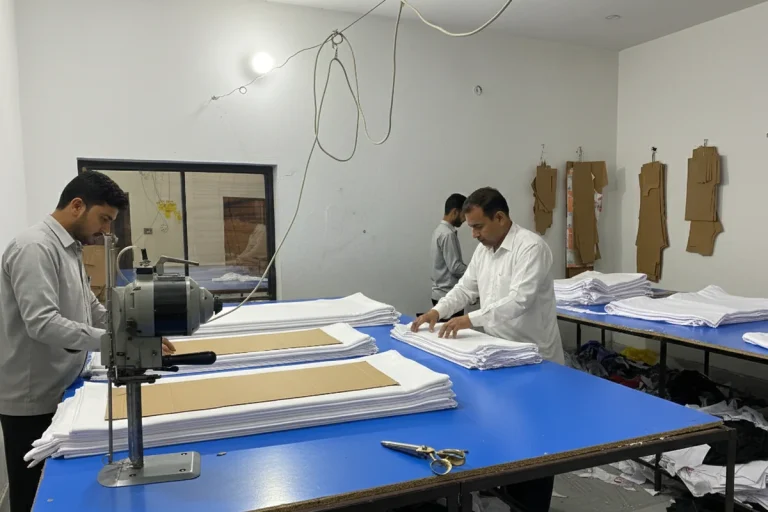
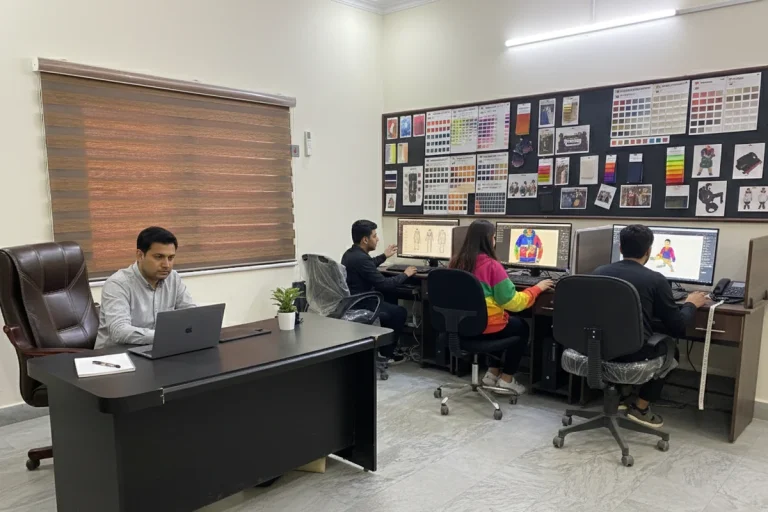
Precision computerized or manual rotary cutting follows engineered digital marker layouts to optimize textile yield and prevent grain distortion. Cut panels are numbered in bundles to ensure color shade consistency across garment panels during sewing assembly.
Step 3: Inline Sewing Audits
Quality supervisors perform inline spot audits at each operator station. Checks include:
- Stitches Per Inch (SPI) verification to ensure structural seam strength.
- Tension calibration on overlock, flatlock, and coverstitch machinery.
- Alignment of matching stripes, plaids, and side seam junctions.
- Thread tension and absence of skipped or broken stitches.
Step 4: Post-Decoration & Laundry Testing
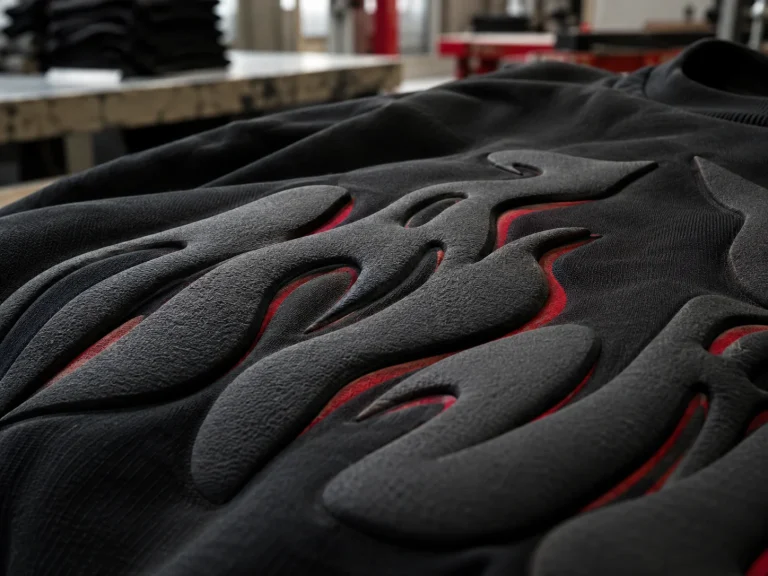
Printed and embroidered units undergo standardized wash cycles to test print adhesion and embroidery backing stability. Garments are measured before and after washing to confirm dimensional stability falls within allowable 3%–5% shrinkage limits.
Step 5: Metal Detection & Export Packaging
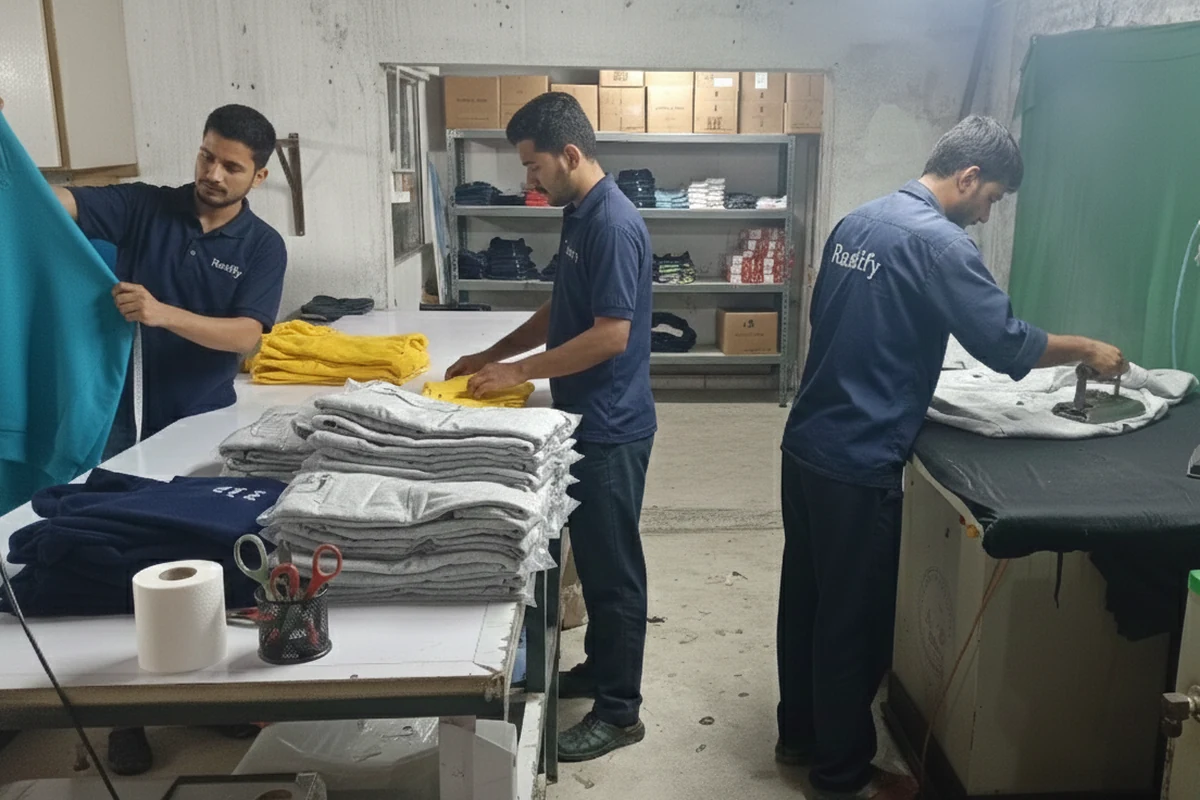
Every completed garment passes through needle-detection conveyor scanners to verify zero broken sewing needle fragments remain embedded in the textile. Garments are steam-pressed, folded, tagged with custom branded labels, and sealed in individual polybags before packing into export-grade corrugated cartons.